Worth a look
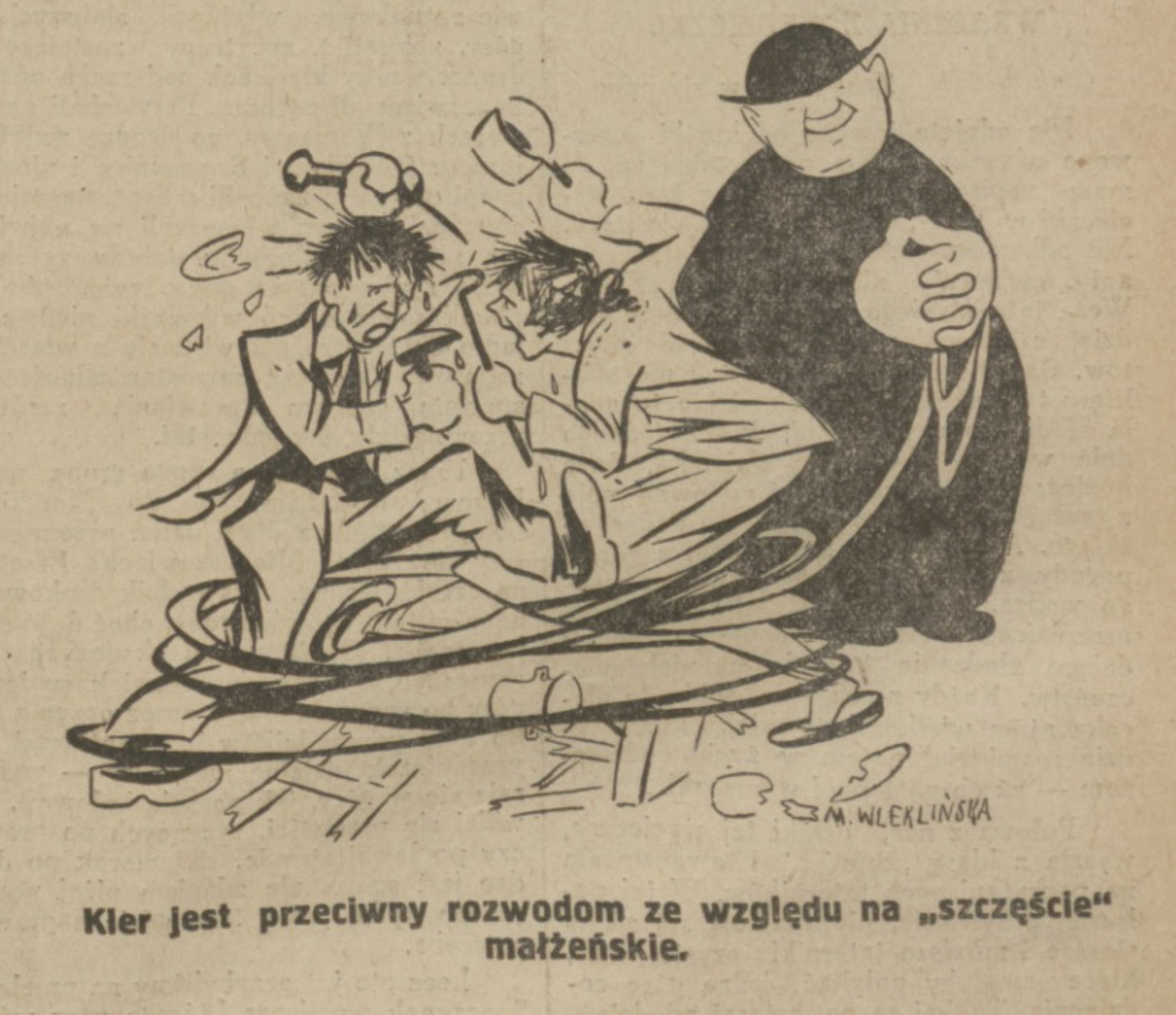
Call for Papers: “Is Caricature a Male Art? Female Caricaturists Then and Now” (Warsaw, 28-29 May 2026)

Art and Heritage in Central Europe
“Caricature is a male art. Women rarely use it in both visual art and literature. Apart from Stryjeńska, Berezowska, and Magdalena Samozwaniec, I don’t see any women in Poland who practice this way of communicating their observations about life.” With these words, Nela Samotyhowa, art historian and critic, concluded her review of the First Salon of Polish Caricaturists, organised in 1928 in Warsaw. The critic’s observation reflected the state of knowledge about women’s activities in this field at the time. Today, it is known that the first amateur artists recorded in existing sources and studies, who showed an interest in caricature and satirical drawings, were active in Polish lands at the end of the eighteenth century. The nineteenth century saw the emergence of additional female cartoonists, as well as the first artists collaborating with the satirical-humorous press. The twentieth century, however, saw an explosion of talented women interested in both fields. For the vast majority, caricature was a secondary activity. Only a few, such as Maja Berezowska and Anna Gosławska-Lipińska, known as Ha-Ga, treated it as their primary art form. Many artists combined caricature with work in illustration and the graphic design of covers and posters. Contemporary female cartoonists continue these traditions, combining classical techniques with new media and various creative disciplines. They increasingly present their work online, utilising social media and artistic platforms.
Despite their undeniable presence in the world of art and media, the work of female caricaturists is notoriously marginalised. The conference aims to reflect on the work of women creating caricatures and cartoon satire from ancient times to the present day: to restore the voice of women artists, to explore their artistic strategies and the ways in which they have used humour, irony, and the distortion of imagery to critique social roles, power, patriarchy, and gender stereotypes.
The central question is the issue of the “masculinity” attributed to caricature. To what extent does this correspond to the “masculinity” attributed to art for centuries? Is the process of overcoming gender exclusion more sluggish in reference to caricature than to mainstream art? Does the internet help with crossing gender barriers?
Although the conference focuses on Polish women artists, papers on female caricaturists from other countries, addressing the sources of their exclusion, or, alternatively, of their success, are very much welcome. The organisers encourage researchers from various disciplines – art history, history, media studies, cultural studies, sociology, gender studies, press history, and visual communication – to submit paper proposals.
The conference takes place in Warsaw, Poland, on 28-29 May 2026.
Please submit an abstract (up to 300 words) and a bio, including academic degree/title and affiliation (up to 150 words), by February 28, 2026, to: karykaturzystki@gmail.com.
Notification of acceptance of the paper will be sent by March 23, 2026. Participation in the conference is free. The organisers do not cover travel and accommodation costs.
Organisers:
Piotr Kułak, Institute of Art History, University of Warsaw
Agnieszka Goluch, Institute of Art History, University of Warsaw
Maria Muszkowska, Eryk Lipiński Museum of Caricature in Warsaw
Paulina Pilcicka, Eryk Lipiński Museum of Caricature in Warsaw
Katarzyna Murawska-Muthesius, Birkbeck, University of London
Read full CfP: https://arthist.net/archive/51524
Similar posts
Copyright © Herito 2020
Designed with  by
OTREE
by
OTREE