Worth a look
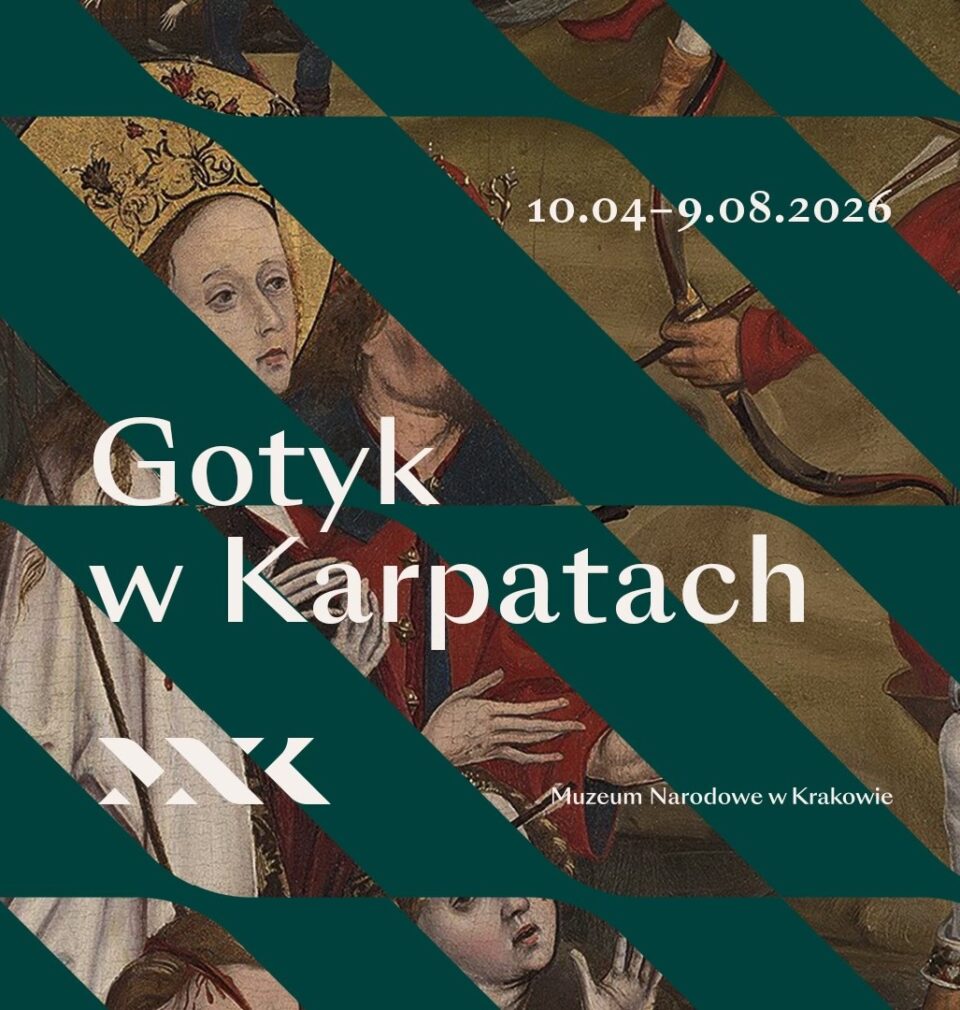
Exhibition “Gothic in the Carpathians” at the National Museum in Krakow

Art and Heritage in Central Europe
The exhibition ‘Gothic in the Carpathians’ is the first attempt to present the art of the late Middle Ages in all countries of the region. Through a collection of about one hundred paintings and sculptures brought from nine countries, supplemented by photographic documentation of non-transportable items (wall paintings, architectural sculptures) created especially for the exhibition, we show the Carpathians as an artistic area with continuous development, where one work of art gave rise to another. The same workshops operated on both sides of the mountains, paintings and sculptures were sent in both directions, and artistic trends intermingled here.
The exhibition presents new discoveries resulting from ongoing conservation work and field research, and provides an opportunity to visually verify attributions made long ago. We also take advantage of the opportunity to reunite, even if only temporarily, works of art whose elements were once scattered.
‘Gothic in the Carpathians’ is a unique opportunity to see up close paintings and sculptures that are difficult to access on a daily basis or have never been shown to the public. This applies, for example, to the extraordinary quality of the bust, the only surviving fragment of the famous Esztergom Crucifix, a work stylistically very similar to the monumental crucifix on the rood beam in St. Mary’s Church in Krakow. A major attraction of the exhibition is a sculpture by Veit Stoss the Younger, the son of a famous woodcarver who settled in Brașov: a monumental figure of St. John the Baptist from the central part of the altarpiece that once stood in the Evangelical church in Roadeș. Another unquestionable highlight of our exhibition is one of the finest sculptures by Master Paweł of Levoča – the Pensive Christ from Prešov Cathedral – which comes as a surprise to those familiar with this woodcarver’s works in St. James’s Basilica in Levoča. In turn, the famous Transylvanian Crucifix was obtained from the Franciscan church in Vienna. Brought from Sibiu to the imperial capital during the Baroque period, it became the most important object of worship there.
Exactly five centuries ago, the Ottoman invasion caused the collapse of cultural ties in the Carpathian region. The 19th and 20th centuries, in turn, were dominated by historical narratives from national perspectives. ‘Gothic in the Carpathians’ opens up a different perspective, which one might describe, following Zbigniew Herbert, as „a search for signs of a lost community”.
The exhibition at the National Museum in Krakow is available from 10.04 to 09.08.2026.
Read more: https://mnk.pl/en/exhibitions/gothic-in-the-carpathians
Copyright © Herito 2020
Designed with  by
OTREE
by
OTREE