Worth a look
Art and Heritage in Central Europe
Exhibitions
Summer exhibitions at the Archdiocesan Museum of Kroměříž

Art and Heritage in Central Europe
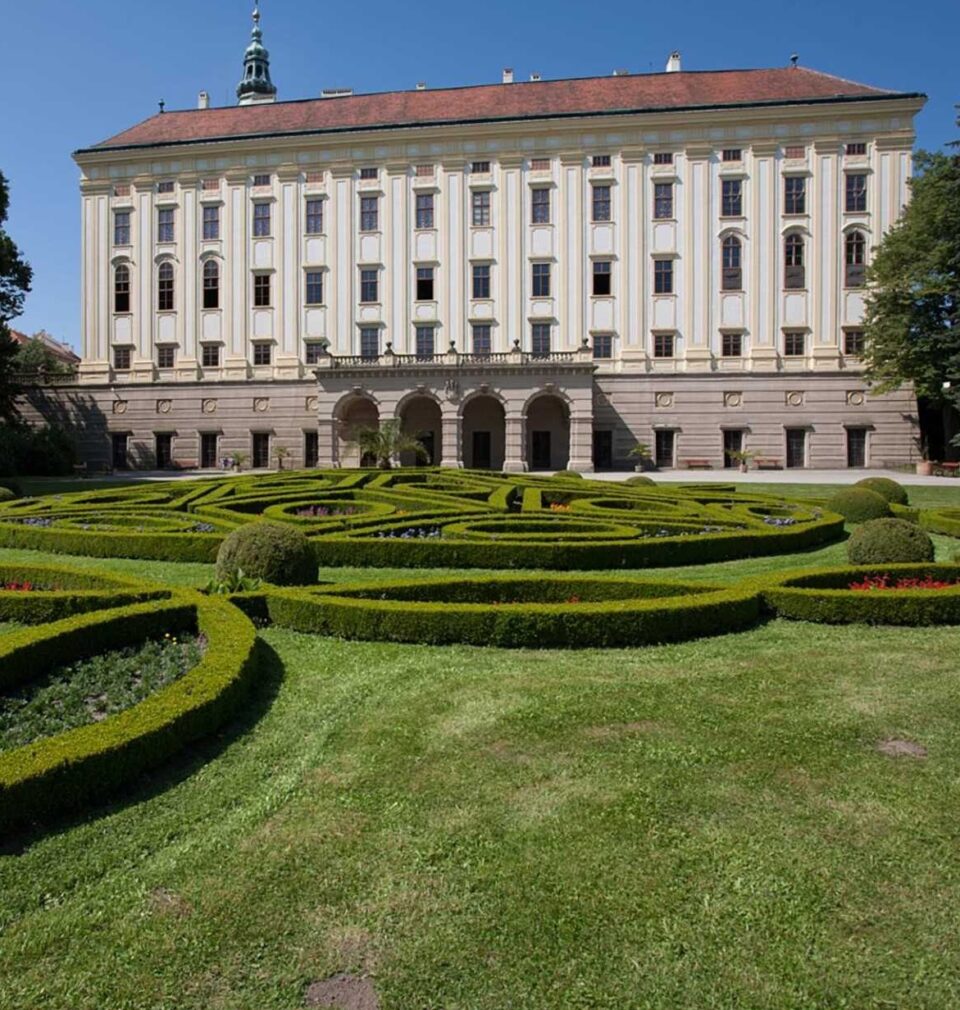
Olomouc Museum of Art invite you this summer to visit following exhibitions at the Archdiocesan Museum of Kroměříž – Archbishop’s Palace, Kroměříž:
- “Theatrum Italiae. Views of Italian Cities in Prints from the Collections of the Archdiocese of Olomouc” available until September 27, 2026.
In the early modern period, Italy was one of Europe’s most important cultural centers. It was a place where one could admire ancient monuments, masterpieces of Renaissance and Baroque art, and observe the transformations of contemporary architecture. Cities such as Rome, Florence, and Venice were veritable treasure troves of visual forms and attracted travelers from all over Europe. While artists sought inspiration and studied the works of their predecessors and contemporaries, for young aristocrats, a visit to Italy was often the culmination of their education. The experience of these so-called Grand Tours significantly shaped the cultural outlook of the European elite and contributed to the spread of artistic styles and aesthetic ideas across the continent. This small exhibition, compiled exclusively from the archbishop’s collections stored at the castle in Kroměříž, presents a selection of topographical albums and graphic vedute depicting Italian cities at the height of their cultural and political prosperity. The exhibits include examples from the generously conceived “atlas” of Italian cities by Amsterdam publisher Joan Blaeu, views of Baroque Rome by Giovanni Battista Falda, and a representative collection of large-format vedute of Florence based on drawings by Giuseppe Zocchi. The exhibition is also the first part of a longer-term cycle which, together with the accompanying catalog, follows on from the exhibition project Architecture in prints of the 16th–18th century from the Collections of the Archbishopric of Olomouc, held at the end of 2025 at the Archdiocesan Museum in Olomouc.
Read more: https://muo.cz/en/vystavy/theatrum-italiae-2/ - “Giovanni Battista Pittoni (1687–1767), The Handing Over of the Keys to Peter” available until September 6, 2026.
A mini-exhibition in the atmospheric setting of the Picture Gallery at Kroměříž Castle offers a fascinating insight into the work of copyists and followers. Visitors can compare the original work by Giovanni Battista Pittoni (1687–1767), “The Handing Over of the Keys to Peter”, from the first half of the 18th century, with a contemporary copy of it. As part of the “A Glimpse into the Storage” series, visitors to the Archbishop’s Castle in Kroměříž can view a work of art that was generously donated last year to the Olomouc Museum of Art by Helena Neumannová, daughter of the prominent Czech art historian Jaromír Neumann (1924–2001), in whose collection the painting was previously held. The nearly 300-year-old painting is now in excellent condition thanks to the work of museum conservator Anna Pišťková in 2025–2026.
Read more: https://muo.cz/en/vystavy/giovanni-battista-pittoni-1687-1767-the-handing-over-of-the-keys-to-peter/ - “Figura Contemplativa. The Human Body in Art from Antiquity to the Present in the Patrik Šimon Collection” available until September 6, 2026.
The representation of the human body has never been merely a matter of recording outward appearance. The human figure concentrates a wide range of meanings and opens up aesthetic, cultural, and psychological modes of perception. Each of its artistic formulations bears not only the imprint of the age in which it was created, but also the ideas, values, and questions that shaped that society. For this reason, images of the human body cannot be understood in one single, definitive way. Every period, every culture, and every viewer may discover in them new and different meanings. Through works drawn from a private collection, the exhibition Figura contemplativa invites visitors to consider this long and multilayered development. In its individual chapters, it presents the principal stages of European art — from antiquity through the Middle Ages and the early modern period to twentieth- and twenty-first-century art. Each of these periods brought its own conception of the human figure, its own aesthetic norms, and its own ways of using the figure to express fundamental questions of human existence.
Read more: https://muo.cz/en/vystavy/figura-contemplativa-2/
Copyright © Herito 2020
Designed with  by
OTREE
by
OTREE