Worth a look
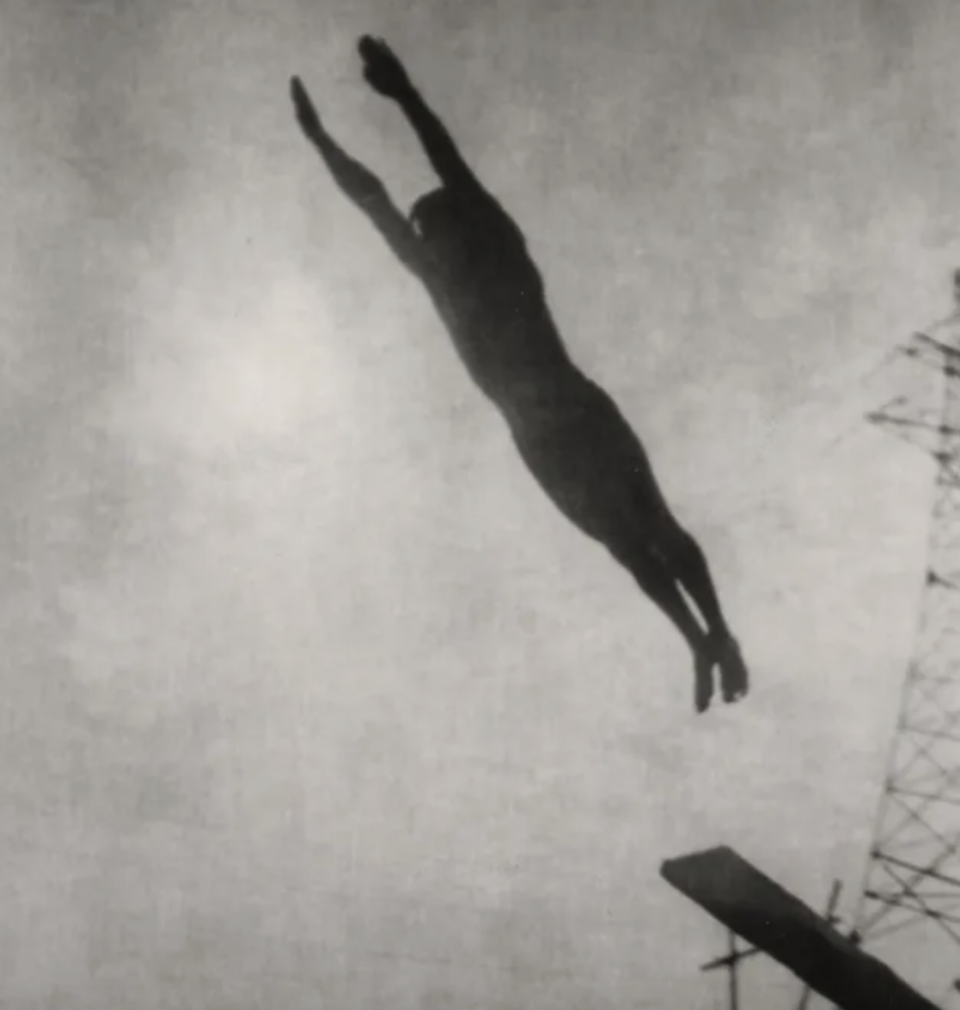
Exhibition “Ukrainian Dreamers: The Kharkiv School of Photography” at the Radvila Palace Museum of Art in Vilnius

Art and Heritage in Central Europe
The Kharkiv School of Photography is a community spanning four generations of artists who use photography as their primary medium of expression. From the period of Soviet censorship through the turbulent years of Ukraine’s independence, revolutions, and the onset of Russian military aggression, Kharkiv photographers have continuously expanded the boundaries of the medium, transforming it into a sharp instrument of social and aesthetic critique.
The history of the Kharkiv School of Photography dates to the late 1960s, when eight artists who met through a regional amateur photo club formed the informal group Vremia. According to their ‘punch theory’, a photograph should strike the viewer and disrupt habitual perception. Through this alienating approach, the first generation sought to move beyond socialist-realist clichés using diverse techniques: photomontages, superimpositions, darkroom manipulations, candid social reportage, and performative play for the camera.
By the 1980s, a new cohort of Kharkiv artists – including the Gosprom collective – partly continued Vremia’s innovations, while partly rejecting them in favour of grey, uneventful photography. In the 1990s, performativity intensified and became a key tool for exploring post-Soviet subjectivity, suspended between memory and fiction. Fast Reaction Group produced particularly influential projects that combined ostentatious self-fashioning with sharp social critique. The subsequent generation – represented by the SOSka, Shilo, and Boba-Group collectives, as well as independent artists – drew on the full range of visual strategies developed within the Kharkiv photographic milieu.
These shared aesthetic affinities, together with close personal ties and professional collaborations across all four generations, justify viewing the Kharkiv School of Photography as a distinct art movement – one that transformed Soviet utilitarian photojournalism into one of the most significant phenomena of Ukrainian contemporary art.
Participating artists:
Boris Mikhailov (b. 1938), Gennadiy Tubalev (1944–2006), Oleg Maliovany (b. 1945), Oleksandr Suprun (b. 1945), Jury Rupin (1946–2008), Viktor Kochetov (1947–2021), Oleksandr Sitnichenko (1948–2018), Volodymyr Shaposhnykov (1949–2017), Evgeniy Pavlov (b. 1949), Anatoliy Makiyenko (b. 1949), Vita Mikhailov (b. 1955), Tetiana Pavlova (b. 1955), Roman Pyatkovka (b. 1955), Volodymyr Starko (b. 1956), Misha Pedan (1957–2025), Sergiy Solonsky (b. 1957), Grigoriy Okun (b. 1957), Boris Redko (b. 1959), Sergiy Bratkov (b. 1960), Igor Manko (b. 1962), Sergiy Kochetov (b. 1972), Bella Logachova (b. 1973), Vasylisa Nezabarom (b. 1975), Yulia Drozdek (b. 1978), Serhiy Popov (b. 1978), Vladyslav Krasnoshchok (b. 1980), Roman Minin (b. 1981), Sergiy Lebedynskyy (b. 1982), Mykola Ridnyi (b. 1985), Hanna Kryvenstova (b. 1985), Igor Chekachkov (b. 1989), Andrii Rachynskyi (b. 1990), Alina Kleytman (b. 1991)
Curatorial team: Olena Chervonik, Sergiy Lebedynskyy, Boris and Vita Mikhailov, Oleksandra Osadcha, Darius Vaičekauskas. Organisers: Radvila Palace Museum of Art of the LNMA, Museum of Kharkiv School of Photography. Project financed by the Ministry of Culture of the Republic of Lithuania; Partners: Ukrainian Institute, „House of Europe“, Cultural Diplomacy Foundation. Sponsors: Lithuanian Culture Institute, Embassy of the Republic of Lithuania to Ukraine; Media Sponsors: Lithuanian National Radio and Television, „JCDecaux Lietuva“
The exhibition in Vilnius is available from 23 April to 20 September 2026.
More information: https://www.lndm.lt/ukrainos-svajotojai-charkivo-fotografijos-mokykla-2/?lang=en
Copyright © Herito 2020
Designed with  by
OTREE
by
OTREE